Note family
Resinous notes
Resinous notes gather true tree exudates beside amber accords, incense labels, oud, and ambergris because perfumery values their depth more than taxonomy.
In this catalog
Most used notes of the family
- Amber16,946 perfumes
- Benzoin4,070 perfumes
- Incense2,911 perfumes
- Ambergris1,609 perfumes
- oud1,314 perfumes
- Myrrh834 perfumes
- Resins334 perfumes
- White Amber298 perfumes
The eight most used, of 30.
The catalog's leader is not a resin
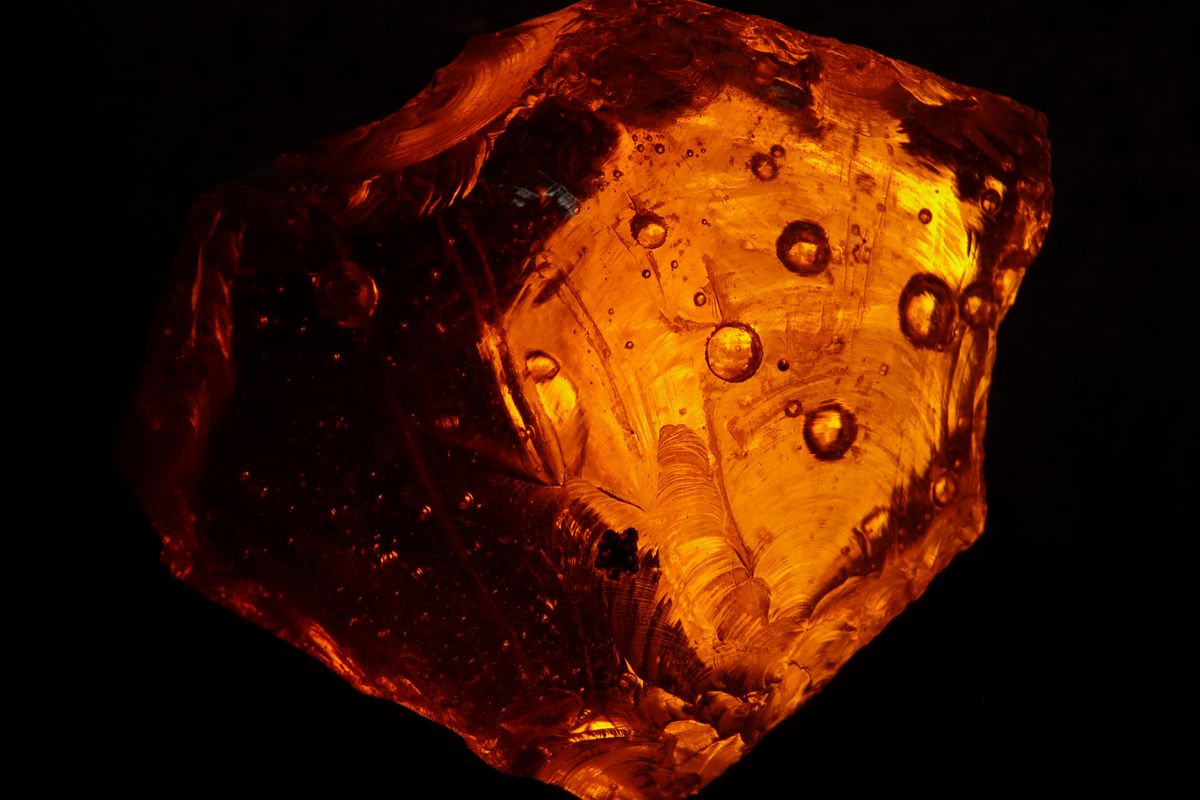
Resinous is a practical family built from incompatible sources. Benzoin and myrrh are plant exudates. Amber is normally an accord, not material scraped from fossilized resin. Ambergris began as an animal substance formed in the sperm whale, while oud develops when wounded Aquilaria wood produces aromatic resin. The catalog groups these names because they create depth and continuity, not because they share an origin.
That distinction matters most at the top of Essentia's data. Amber dominates the family by an enormous margin, yet the entry identifies no fixed formula. It can point toward labdanum warmed by vanilla or a clean modern amberwood effect. A pale musky abstraction falls under the same name. The leading note in the resin category is therefore its broadest editorial container.
A category centered on amber measures language as much as material use. Benzoin named in a pyramid is a concrete disclosure. Amber can be a genre or an atmosphere. It also serves as shorthand for the whole base. Treating those records as equivalent would turn a useful count into false chemical precision.
Exudates become perfume materials
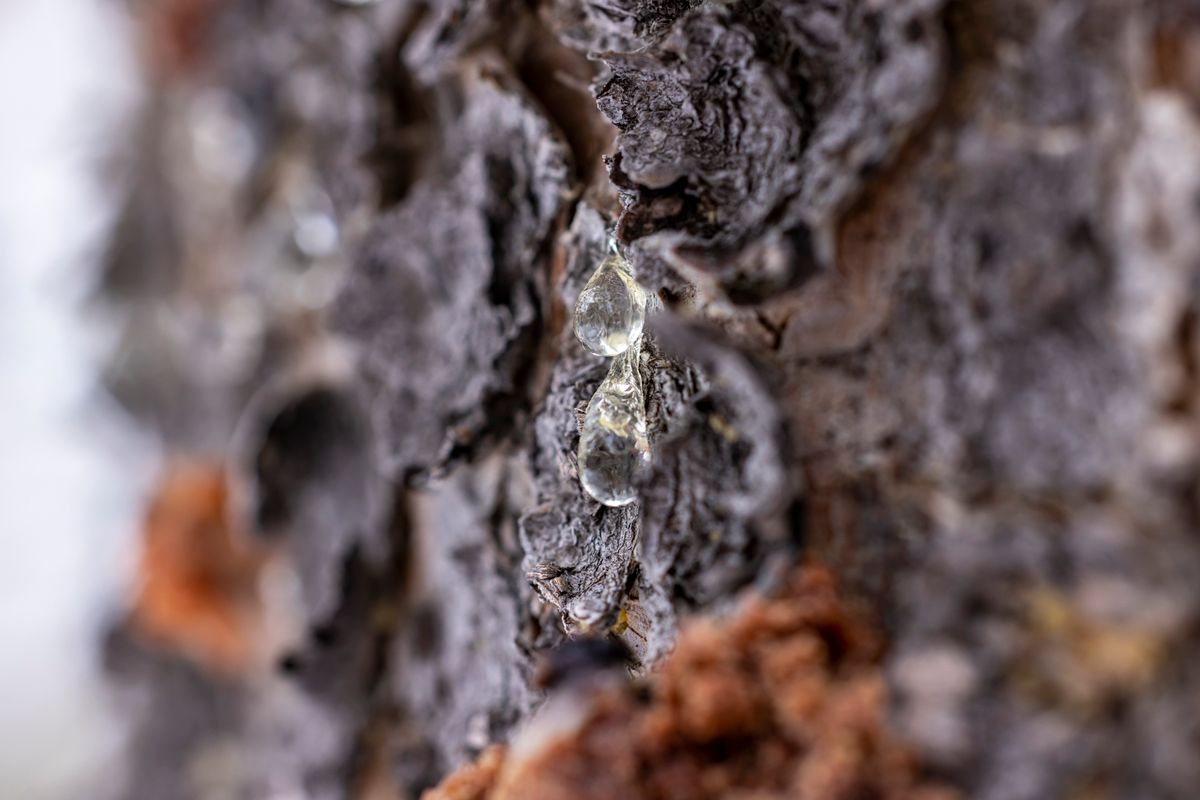
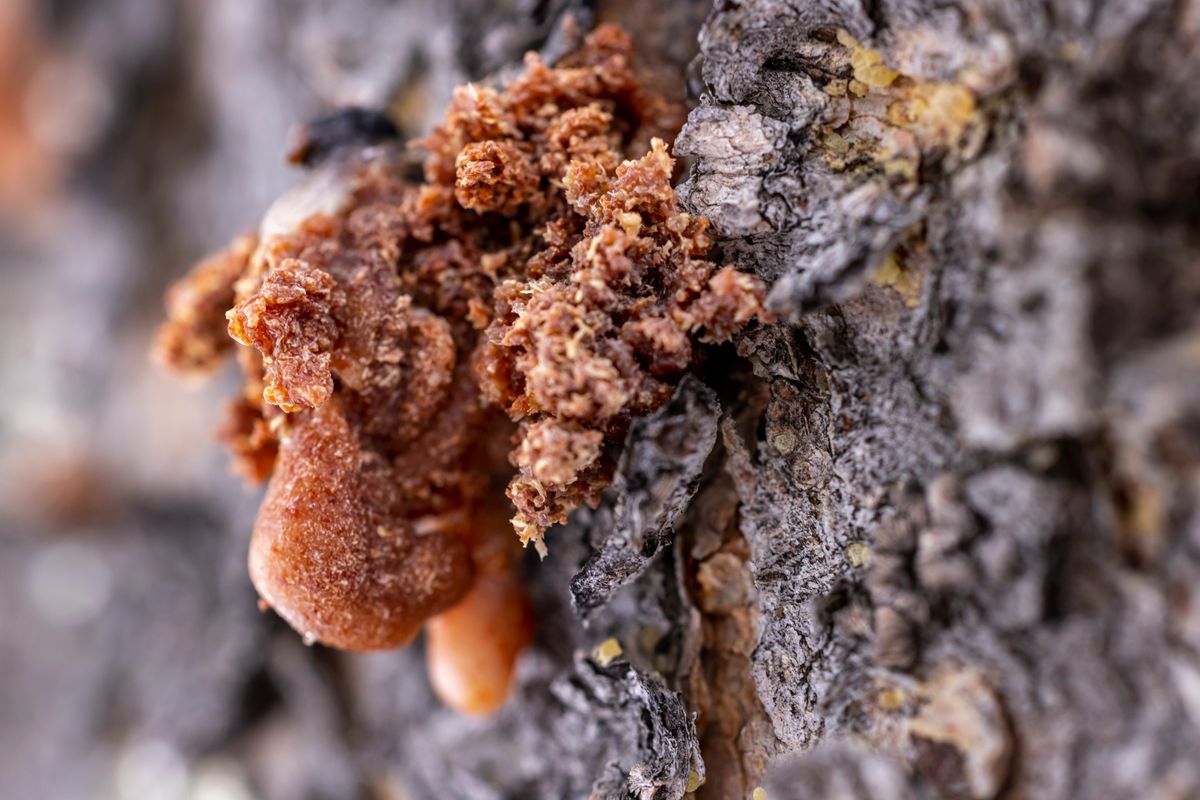
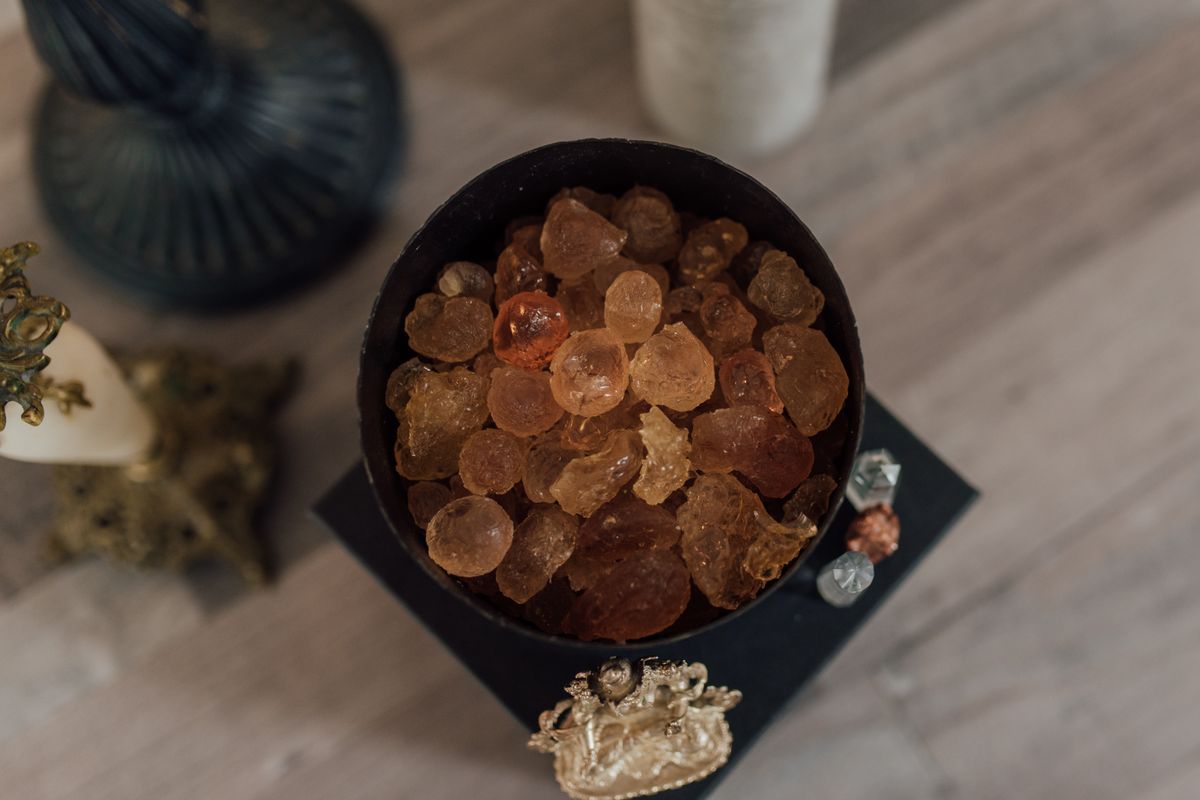
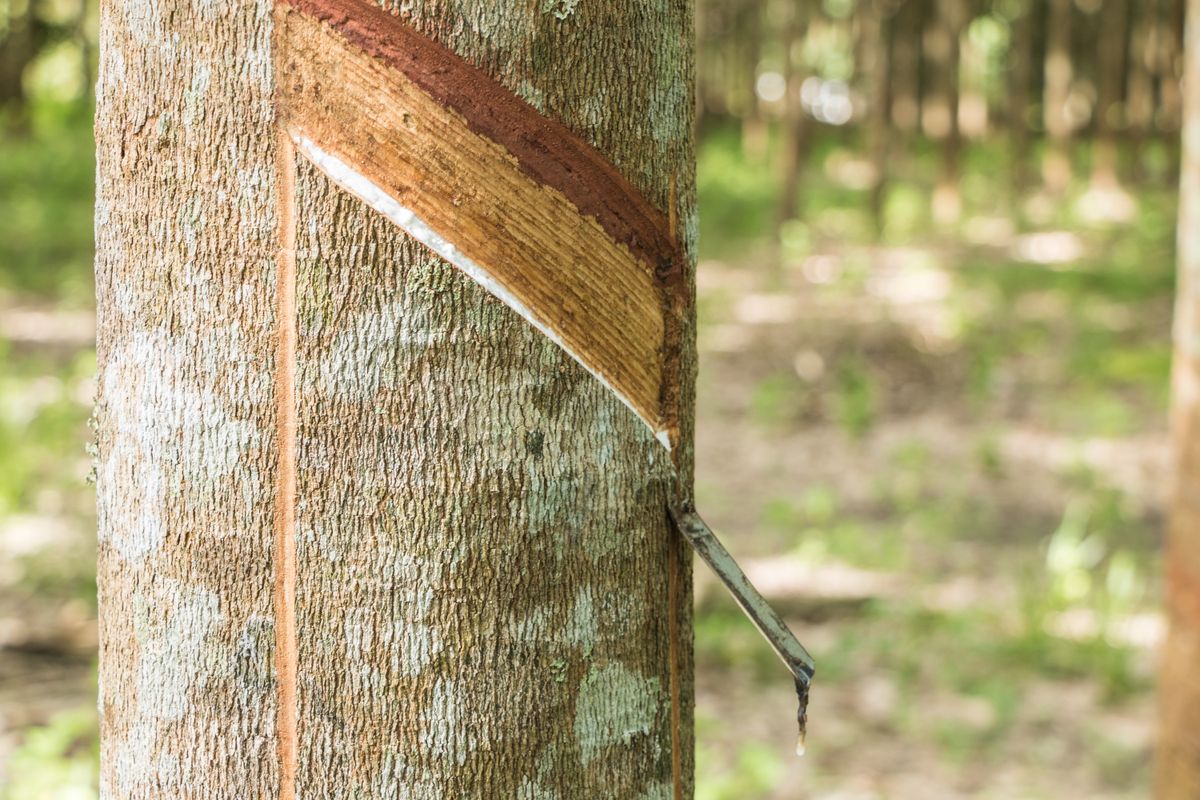
A raw resin is a plant's response to injury, but perfumery receives it only after processing has selected part of the smell. A distilled oil and a resinoid do not present the source in the same way. Benzoin resinoid is soft and balsamic, with a vanilla association that can turn rough woods into a continuous base. Myrrh is darker and bitter. Elemi retains more volatile lift, so its lemony-peppery edge can appear before the dry-down.
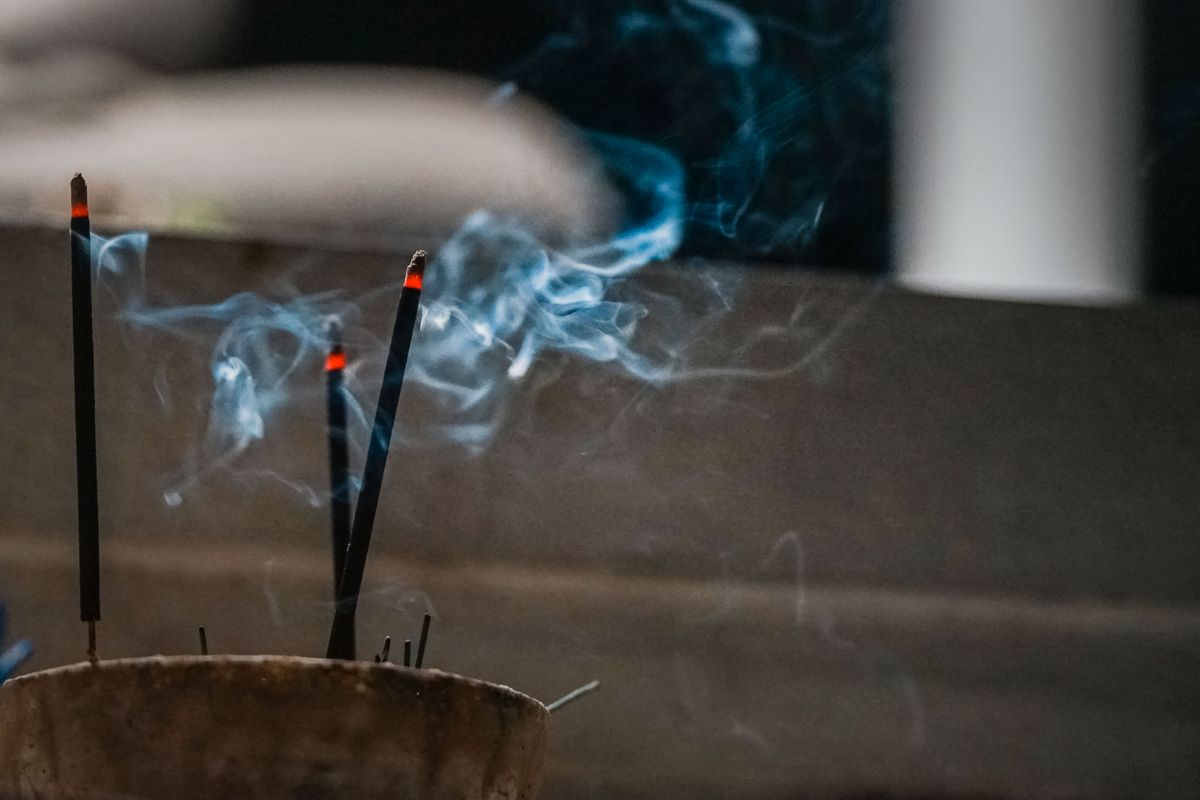
Frankincense shows the family moving in two directions at once. Distilled oil emphasizes bright terpenic facets and can rise beside citrus. A resinoid carries more body and a slower balsamic warmth. Smoke is not automatically present in either material; the familiar church-incense effect often comes from an accord that joins olibanum character to burned woods or other smoky materials.
These materials persist without remaining static. Benzoin becomes smoother as sharp notes leave. Myrrh can reveal medicinal bitterness after an initially sweet surface. Elemi loses its sparkle and leaves a transparent resinous line. Their value lies in this movement: a resin makes the base develop instead of merely endure.
Amber overwhelms the distribution
Amber appears in several times more perfumes than benzoin, the next entry. By the time the ranking reaches generic Resin, amber's lead spans far more than an order of magnitude. No other family in this first group is so dependent on a single published word.
The runner-up tier is more informative about materials. Benzoin leads it, followed by Incense. Oud then appears above ambergris, while myrrh sits at a further distance. That order places a sweet balsam beside an undefined burned-aromatic effect, then crosses into resinous wood and animalic marine history. The family's coherence is functional: all can make a base feel inhabited rather than empty.
Generic naming is duplicated lower down. Resins and Resin occupy separate records with similar reach. The same split appears between Incense and frankincense, although those two words are not perfect synonyms in actual formulas. Catalog normalization cannot merge them safely without reading the source perfume, but leaving them untouched visibly fragments the data.
Ambergris and amber part company
Ambergris is not amber with a marine accent. Historically it was aged animal material valued for diffusion and a warm, salty persistence. Modern perfumery largely reconstructs its effect with molecules and accords. Its place in the resin family comes from behavior in the base, not from botanical kinship or shared smell.
Oud is closer to resin in origin but still resists a single profile. Genuine agarwood varies with species and infection, while processing changes it further. Published oud notes frequently describe accords built from woods and leathery materials rather than natural oil. The catalog cannot identify which route a formula took, so its oud count is evidence of declared style rather than proof of raw-material volume.
This is where editorial language earns its place. Amber and ambergris are culturally loaded names that invite the reader to imagine rarity. Oud carries an equally powerful claim through another history. Their records should be read as perfume claims first. Benzoin and elemi disclose a narrower olfactory tool; the larger names disclose the world the brand wants the base to evoke.
Color multiplies the amber accord
White amber and black amber appear as distinct notes below the core materials. Crystal amber adds another variation. The color does not identify a standardized substance. White usually points toward a cleaner musky amber, while black promises darkness through woods or smoke. Crystal suggests transparency and radiance. Each is a styling instruction attached to an already flexible accord.
The tail pushes that freedom further. Coral Amber and Amber from Tunis appear in isolated perfumes, where color or place carries more information than chemistry. Amber Oil sounds material-specific but still does not establish a formula. These labels are valuable evidence of how brands narrate warmth, not a stable map of resin extraction.
Every resin-category entry currently belongs to at least one perfume. Rarity therefore means isolated disclosure, not an unused placeholder. The long tail contains real published language, but its authority is uneven. Benzoin can be smelled as a material. Coral amber has to be interpreted as an image. The catalog becomes more honest when it preserves both and refuses to pretend they are the same kind of fact.